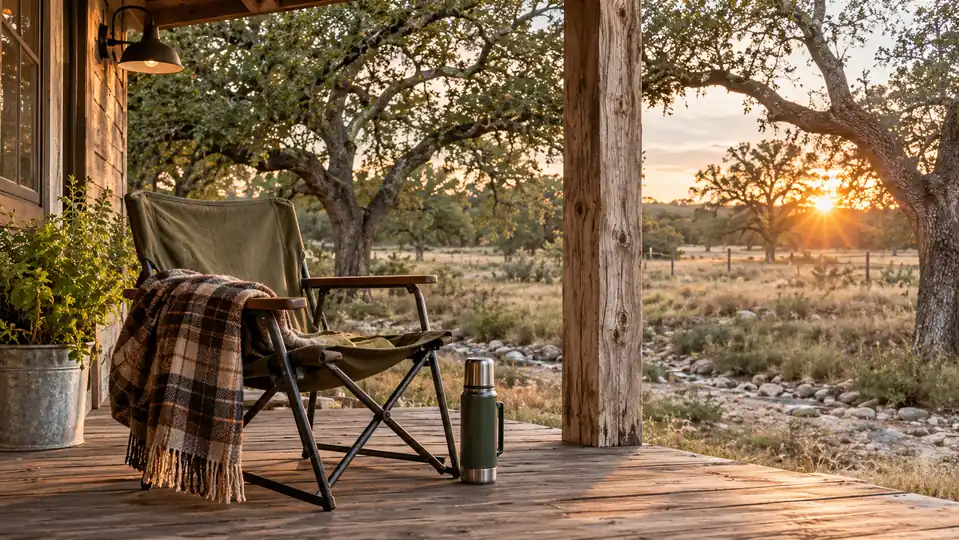
The first thing I noticed about the K&F Concept 64 inch tripod was not the tripod. It was how quiet the porch got once I stopped fighting with the little tripod that came with my spotting scope. I bought the K&F Concept in April 2024, about two and a half years ago, because my arms were tired and the coastal wind at Aransas was winning. I am 63, retired after 31 years as a flight attendant, and I live on four acres outside Kerrville with my husband Paul. I am not a professional photographer. I have never sold a photo. What I wanted was simple: something steady enough to hold my camera and long lens while I waited for a bird to move, and steady enough to hold the scope when the whooping cranes were a quarter mile out.
This is the honest review, the one I wish I had read before I bought it. Not because the tripod is bad. It is not. But because most of what gets said about it skips the tradeoff that decides whether it will work for you, and that tradeoff is weight.
The Quick Verdict
Light enough to carry from the car without thinking about it, steady enough for a mirrorless camera and a zoom lens, and honest about its limits in wind at full height. A good fit for a hobbyist who travels by car and watches more than shoots.
Amazon Check Today's Price →The 1.15 kg weight is the whole point, and today's price is worth checking
The K&F Concept 64 inch tripod comes with the 36mm ball head, quick release plate, phone holder, Allen wrench and bag. The listed weight limit is 17.6 pounds.
Amazon Check Today's Price on Amazon →How I've Used It
The tripod lives in the back of my Outback in its bag. It has been to Lost Maples State Natural Area more times than I can count, to South Llano River State Park on cool mornings, and to Aransas three Januarys running. At home it stands on the back porch, which faces a small dry creek bed, and it holds either the camera with the 100-400mm class zoom or the Gosky scope, depending on what I am watching. I do not take it on hikes. I am past the age where I want to carry anything extra up a limestone trail.
I use it the way a hobbyist uses a tripod, which is to say slowly and without a checklist. I set it up, I level the camera roughly, I wait. White-tailed deer come through the creek bed most evenings. The turkeys are less predictable. The painted buntings in summer are too quick for me and always have been. What I have learned in two and a half years is that a tripod is not really about sharp photos. It is about whether you stay out there long enough to get them. A shaky image is disappointing. Aching arms are what send you inside.
The tripod I used before this one was the small one that came with the scope. It made me quit early. My shoulders would ache from holding the camera still, and the scope would tremble in the wind off the coast. The K&F Concept did not make me a better photographer. It made me a more patient one, and patience is what actually gets the photo.
The first time I set it up, I had the legs uneven and the camera leaning. I blamed the tripod for about ten minutes. Then I read the little card that came with it and realized I had not tightened one lock. That has happened once, and it was my fault.
The Weight Question Nobody Leads With
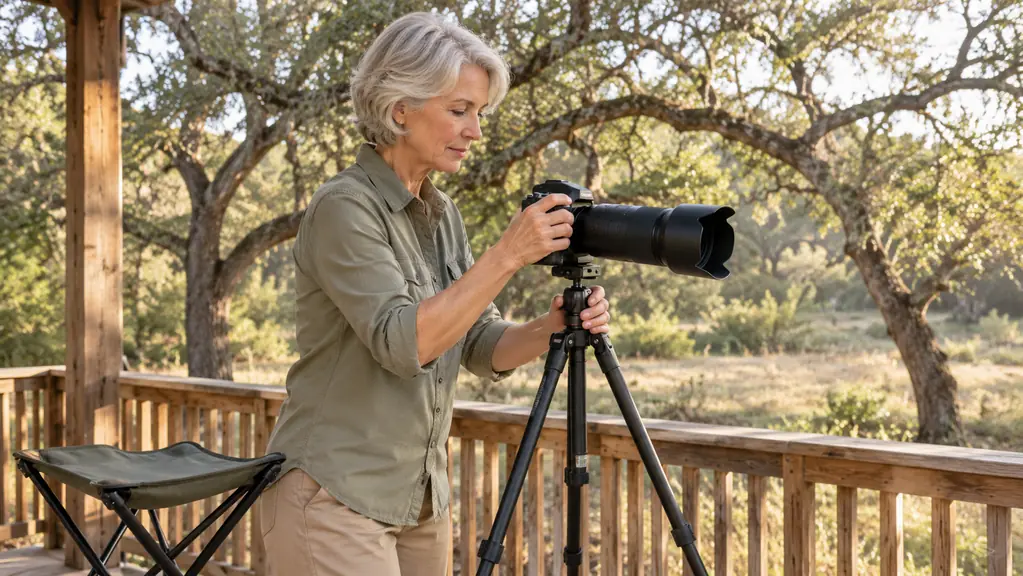
I want to start with the number that matters most and gets mentioned least: 1.15 kg. That is about two and a half pounds, and it is the whole reason I bought this tripod instead of a heavier one. I can carry it from the car to a viewing spot without thinking about it. I can pick it up with one hand while holding the scope in the other. The listing says the weight limit is 17.6 pounds and the 36mm ball head is rated to 8kg. My camera and lens together are well under that, so the limit is not what I worry about.
But lightweight is not free. The weight that matters is not the load rating. It is how the tripod behaves when the wind pushes on a long lens. At Aransas, the wind comes off the water with nothing to stop it. The first January I took this tripod, I set the scope at 40x and watched the image tremble. Not because the tripod was failing, but because I had the legs at full height and the whole thing was acting like a sail. I lowered it by a foot, sat on a folding stool, and the trembling mostly stopped.
That is not a defect. That is physics, and it is the thing nobody tells you about a 64 inch tripod. The top of the height range is for flat ground and still air. The middle of the height range is for real life. I have read reviews that call this tripod flimsy. I understand why someone would say that, and I also think they are asking it to be something it is not. It is an aluminum travel tripod that weighs 1.15 kg. It is not a studio stand. If you put a heavy professional rig on it and extend everything, it will move. If you put a mirrorless camera and a zoom lens on it and keep the legs reasonable, it is steady.
The little scope tripod weighed almost nothing, but it also could not hold the camera with the long lens without drooping. The K&F Concept is heavier than that tripod and lighter than everything else I looked at. That middle place is the whole reason I bought it.
What the Ball Head Actually Does
The 36mm ball head is the part I understand least and appreciate most. Before this tripod, I had only used the small head on the scope's tripod, which never felt like it wanted to point where I aimed it. The ball head on the K&F Concept is different. You loosen one knob, the camera moves freely in any direction, and you tighten the knob when you have the frame you want. The listing says it rotates 360 degrees, and that matches what I experience, though I mostly use a small arc of it.
What I did not expect is how much this changes the way I watch. With the old tripod, I would set the scope on a bird and leave it there, because moving it was a chore. With the ball head, I can follow a turkey as it walks through the live oaks without taking my eye off it. That sounds like a small thing. For me it was the difference between watching an animal and looking at a photograph of one.
The head is not perfect. When I loosen the knob fully, the camera can flop if I am not holding it. I learned that on the porch, though nothing was damaged. I now keep one hand on the lens barrel while I loosen it. A head with separate tension controls would be nicer. This one is what comes with the tripod, and for my purposes it is enough.
At 40x on the coast, lowering the tripod a foot did more for the image than any setting I could have changed.
The Leg Locks and the Height Range
Four sections per leg. Flip locks. The listing says you can open and close all of them with one hand in a few seconds, and that is close to true. I can set the tripod up in about thirty seconds, which matters when a bird is already moving and you are trying to get the scope on it. I count the sections as I open them, because a half open lock is how you end up with a leaning camera.
The height range is 20.4 inches at the low end and 64.1 inches at the high end. I am 5 foot 4, and at full height the tripod is taller than I need. I usually run it at about shoulder height, which puts the camera at a comfortable place for me to stand behind. When I sit on the porch steps, I collapse the legs to the low end and it works there too. The folded size is 15.5 inches, and the whole thing fits in the bag it came with. The bag fits behind the seat in the Outback.
One thing I would tell anyone buying this: the flip locks are strong, but they are not silent. If you are trying to be still near wildlife, opening a leg makes a click. I have gotten into the habit of setting the tripod up before I start watching, rather than adjusting it while a deer is in the creek bed. The leg diameter is 1.5 inches, which is part of why it feels more solid than the little scope tripod, but it is still a travel tripod.
What Comes in the Box, and What I Actually Use
Included with the tripod: the tripod itself with the 36mm ball head, a quick release plate, a phone holder, an Allen wrench, and a bag. I use the bag and the quick release plate constantly. I have never used the phone holder. My phone is an ordinary iPhone, and I take digiscoped photos through the scope with an adapter that came with the scope, not with this phone holder. That is not a knock on the tripod. It is just an honest note that not everything in the box will matter to every person.
The quick release plate is the piece I would replace first if I lost it. It screws into the bottom of the camera, clicks into the head, and lets me switch between the camera and the scope without unscrewing anything. I bought a second plate so I could leave one on each. That is the only accessory I have added. The plate is small enough that I keep the spare in the bag's side pocket and forget it is there until I need it.
The Allen wrench is for tightening things that come loose. I have used it once, on a leg lock that had worked slightly loose after a year of use. It took two minutes. The warranty is one year, and I have not had to use it.
Where It Struggles
I have three honest complaints. None of them are deal breakers, and all of them are things I knew or suspected before I bought it.
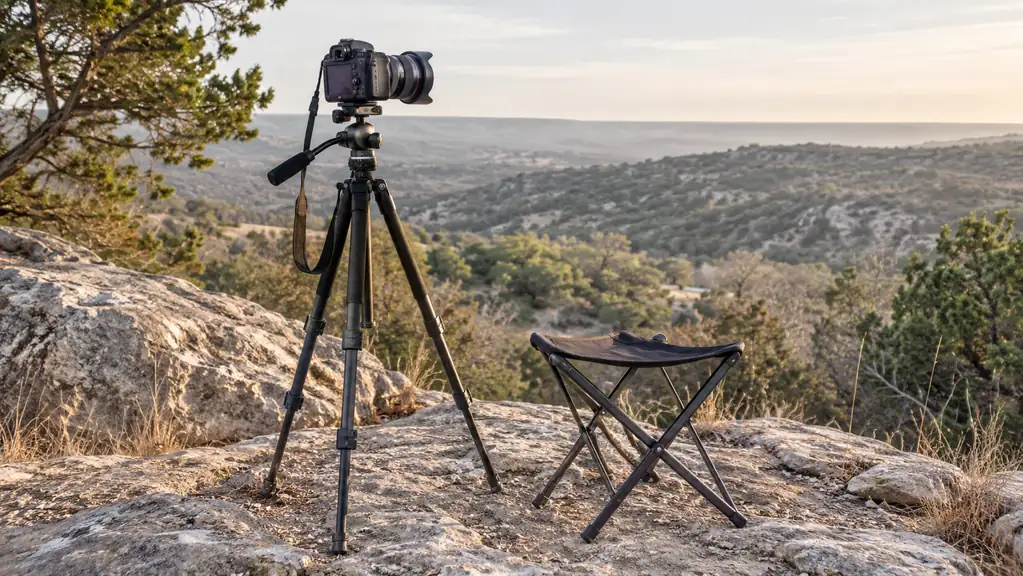
The first is wind. At full height, with a long lens, the tripod moves in a steady coastal breeze. I have learned to lower it and to stand so my body blocks some of the wind. The second is the ball head at full extension. When the camera is high and the lens is long, the whole assembly feels top heavy. I tighten the knob firmly and check it twice. I have never had it slip, but I think about it.
The third is the leg locks in cold weather. They are fine, but the metal gets cold and my hands are not as strong as they were at 40. If you have grip issues, a tripod with twist locks might be easier. I do not know, because I have not owned one. What I can tell you is that on a 38 degree morning at South Llano, I was slower setting up than I am in May, and that is as much about my hands as the tripod.
What I Liked
- 1.15 kg carries easily from the car to a viewing spot
- 36mm ball head moves smoothly and is rated to 8kg
- Flip locks set up fast, about thirty seconds for me
- 64.1 inch top height helps on uneven ground and on a porch
- Quick release plate makes switching between the camera and the scope simple
- Bag, plate, phone holder and Allen wrench included
Where It Falls Short
- Moves in a steady wind when the legs are at full height
- Feels top heavy with a long lens at full extension
- Flip locks click, which matters near wildlife
- One knob on the ball head, with no separate tension control
- Phone holder has not been useful to me
Who This Is For
The K&F Concept 64 inch tripod is for the person who wants one tripod that can go in the car, come out at a state park, and hold a camera with a zoom lens steady enough to watch an animal without hurrying. It suits a mirrorless camera and a lens in the 100-400mm class. It suits someone who mostly stands or sits in one place. It suits someone who values 1.15 kg over absolute rigidity, because the best tripod is the one you actually carry.
It also suits a scope. Mine is a Gosky 20-60x60, and the K&F Concept holds it better than the small tripod that came with it. I keep the scope between 20x and 40x, and at that range the tripod is steady enough for me to see detail on a bird a long way off. At 60x the image gets dim and shaky, but that is the scope as much as the tripod.
Who Should Skip It
Skip it if you have a heavy professional body and a fast long lens that together weigh close to the 17.6 pound limit. Skip it if you shoot in constant wind and cannot lower the tripod. Skip it if you need silent setup, because the flip locks click. Skip it if you want a head with separate tension and pan controls, because this one has a single knob. None of those are criticisms of the tripod. They are just different jobs. I would rather you know before you buy than find out on a windy morning.
What I'd Tell You If We Were Sitting on My Porch
I would tell you that the tripod is not the interesting part. The interesting part is the twenty minutes before the deer comes out, when the light is going and the porch is quiet and you have nowhere else to be. The K&F Concept makes those twenty minutes easier because you are not holding anything. You are just watching.
Would I buy it again? Yes. At the two and a half year mark, it has done what I asked. The leg locks still hold, the ball head still moves smoothly, and the bag has held together. I have not babied it. It rides in the car, it gets set up in the wind, and it comes home with dust on the legs.
I would buy the same tripod, and I would still lower it in the wind. That is the whole review.
If you want one tripod that rides in the car and holds a long lens steady, start here
Two and a half years in, this is still the tripod I reach for on the porch and at the state park.
Amazon See the K&F Concept tripod on Amazon →