For a year I had a plain tube feeder hanging off the back porch, and I could tell you it was busy. I could not tell you who was doing the eating. Cardinals, I assumed. Maybe finches. The birds came and went while I was in the kitchen, and by the time I got to the window with my coffee, whatever had been out there had already left. That is the whole reason the NETVUE Birdfy went up on a post in September 2024. Not to attract birds. To find out which ones I already had.
Here is what two years with it has taught me. Attracting birds to a camera feeder is mostly ordinary bird feeding and only a little bit camera. The camera does not bring anything in. Seed does, cover does, water does, and time does. What the camera does is settle the arguments you have with yourself about what you saw. Everything below is the order I would do it in if I were starting over on another four acres.
The feeder that finally told me who was eating
NETVUE's Birdfy clips every visitor and identifies it for you, with no paid subscription. Mine has sat on the same post for two years and I still check it before I check the weather.
Amazon Check Today's Price on Amazon →Step 1: Put the feeder where birds already travel, and close enough to the house for a signal
Before you dig a hole, spend three or four days just watching. Not where you would like the birds to be. Where they already are. On my place the traffic runs along the cedar edge above the dry creek bed and then down the fence line where the grass goes to seed. A feeder parked in the middle of open lawn is a feeder a bird has to talk itself into, and most of them will not bother.
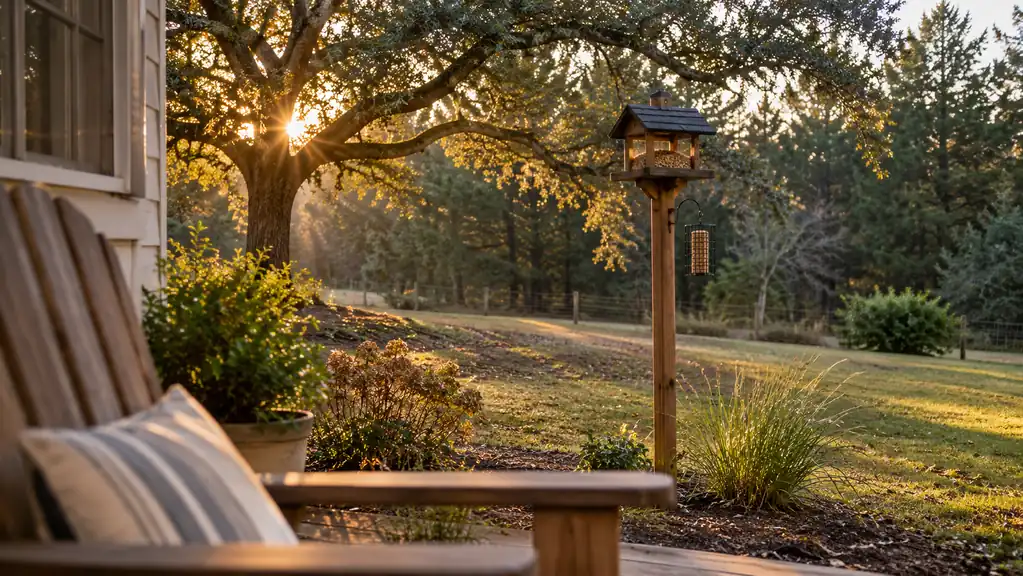
The other half of placement is signal, and this decided more for me than anything else. The camera has to hold a stable Wi-Fi connection to send you the clips, so walk out with your phone and watch the bars before you commit. I did exactly that in early September 2024, walking the property and stopping every ten feet to look at the screen. Two spots that looked perfect from the porch dropped to a single bar. The post I ended up using held a steady signal, and that settled it. My post sits about thirty feet off the back porch, in sight of my chair. Close enough to reach the house signal, far enough that the birds stopped flinching every time the porch door opened. That distance is the single number I would give anyone.
Then there is the tree. I put the post up near the live oak because that looked like the natural spot, and the squirrels found it within days. Moving the post a few yards out, away from the trunk and away from the branches they could launch from, cut most of that traffic without buying a thing. The feeder weighs about three pounds, so shifting it is not a two-person job. I moved it once, in October, and it has stayed put since.
Step 2: Settle on one seed and keep it filled on the same schedule
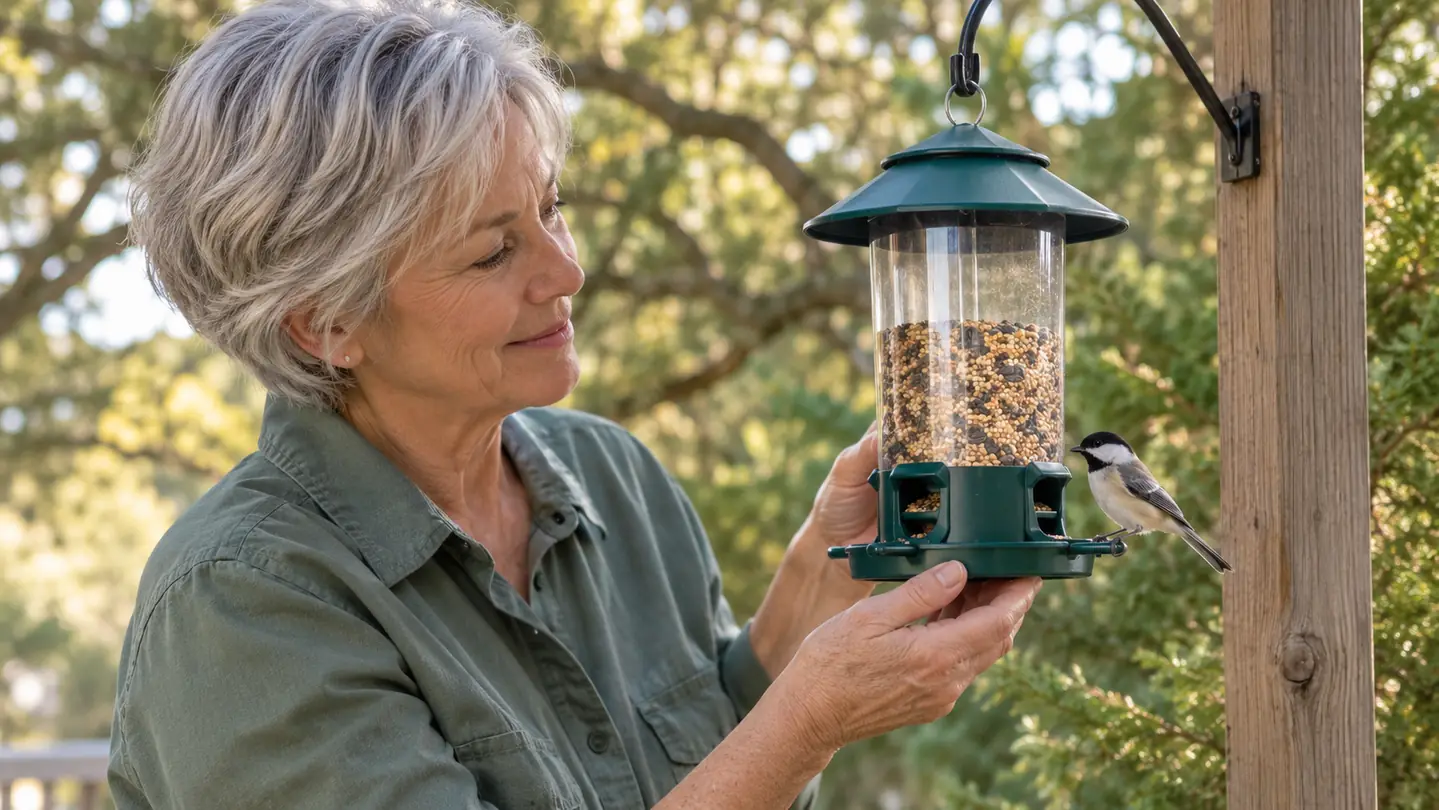
Mine is filled with mixed seed, about twice a week, and the guest list has been steady: cardinals, chickadees, titmice, house finches, and painted buntings in the summer. I did not chase a special blend. What I did do was stop changing my mind. Birds build a route through a yard, and a feeder that empties and sits empty for a week falls off that route. Fill it on the same days and they will start timing you.
For the first month I filled it on a Tuesday and again on a Friday, no exceptions. By the second week the chickadees were waiting on the fence line before I got back to the porch. Then in November I skipped a Friday because of a cold, and the feeder sat half full and quiet for four days. That was the clearest lesson of the whole project, and it cost me nothing to learn except a little patience with myself.
The capacity matters more than I expected. At 1.5 liters, a full feeder gets me through several days of heavy traffic, which means a week away in January is the only time Paul has to top it up for me. In wet weather I check it more often and dump anything that has clumped. Seed that has gone damp will empty a feeder faster than a hawk will.
One thing I got wrong early: I kept moving the post a few feet to get a better angle on the camera. Every move cost me a week of birds relearning the yard. Pick your spot with the camera in mind the first time, then leave it alone. If the framing is not perfect, you can adjust the aim of the camera without moving the whole post, and that is the cheaper fix.
Step 3: Leave the edges messy and put out water
The birds at my feeder are not commuting from somewhere else. They live in the cedar and the live oak, and they use the feeder because it is on their way. If your yard is mowed to the fence and raked clean, you can have the finest feeder on the market and still eat lunch alone. Leave a strip at the back that you do not mow. Let the grass go to seed. A brush pile in a corner will do more for you than a second feeder.
Water is the piece people skip. I keep a shallow dish on the ground near the creek bed, refreshed every morning, and on hot afternoons in August it is busier than the seed. Mine is an old ceramic saucer, maybe fourteen inches across, set on a flat rock so it cannot tip. On one August afternoon I counted nine birds queued around it, taking turns, while the feeder hung there ignored. Two minutes with the hose every morning, and it is the cheapest thing I have done for the birds. Keep it shallow and keep it clean. A deep dish is a drowning risk and a dirty one spreads illness between birds, which is the last thing you want at a feeder.
I will also say this plainly, because it took me a while. Resist the urge to tidy up before guests arrive. The half-wild corner of my four acres is where everything happens, and every hour I have spent making it neater is an hour I have spent making it worse.
Thirty feet turned out to be the number that mattered. Close enough for the signal, far enough that the porch door stopped emptying the feeder.
Step 4: Handle squirrels and weather before you buy anything else
Squirrels will find a feeder in days. Not weeks. Days. The fix that worked for me was distance, not hardware. The first week of October 2024 I watched one hang off the hopper by its back feet and empty a day's seed in under twenty minutes. After I moved the post I still see them, but they are working for it now, down on the ground, cleaning up what the cardinals drop. My post is well away from the oak canopy, with no branch close enough to jump from, and that alone solved most of it. I have not bought a baffle. I may yet, but I wanted to try the free version first, and the free version mostly worked.
Power is the other thing to sort before winter. Mine runs on its battery, and I have not added a solar panel. That has been fine, because the post is close enough that swapping is a two-minute walk, but it does mean somebody has to remember. If your post is out at the far end of the property, add the panel. If it is thirty feet from the porch like mine, you can wait and see how it goes.
An honest word about the camera itself. The clips are 2K and clear enough that I can count the feathers on a titmouse's head, which is exactly what I wanted. The camera also has night vision, and mine mostly records an empty feeder after dark, plus the occasional fox passing through on its way to the creek bed. That is not a complaint. It is just the truth about a feeder camera at night.
Step 5: Read the clips in the morning and keep a plain notebook
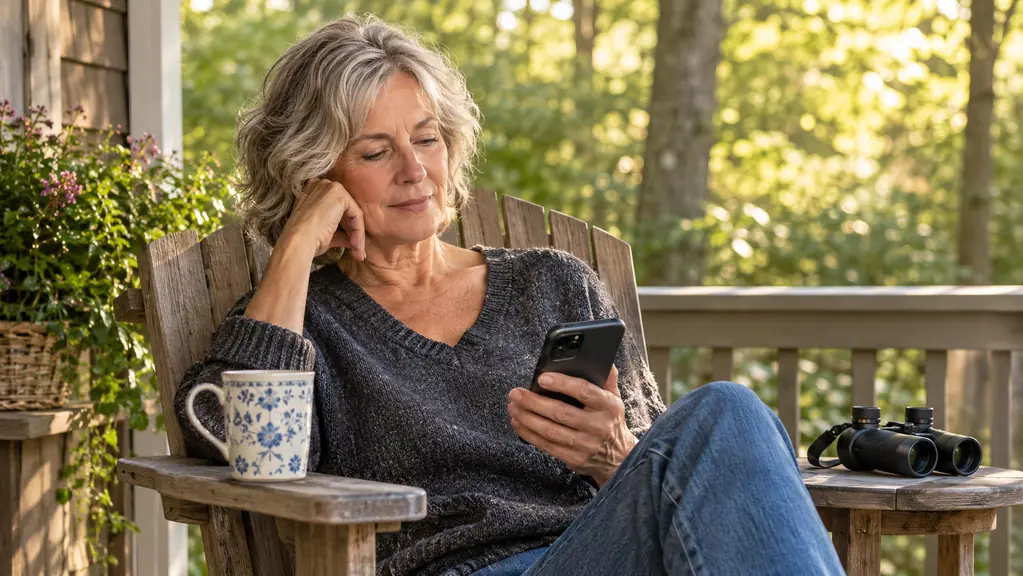
The feeder sends a notification to my phone when something arrives, and I have gotten into the habit of going through the clips with my first cup of coffee. Paul, who has never shown the slightest interest in birds, has started asking who came by. That is the actual return on the money, not the photographs. It turned a yard I thought I knew into a place with a schedule.
The identification is automatic and there is no paid subscription behind it, which mattered to me because I did not want a second bill for a hobby. I still check the odd one against my binoculars, out of habit and because I like to. Two years in, it has been right more often than I have.
What I would add to the setup is a notebook. Nothing fancy, just dates and names. The painted buntings show up in my yard in the summer, and I can now tell you the week they arrived each year because I wrote it down: the third week of April in 2025, and the second week of April in 2026. The cardinals never leave. The titmice come in a burst at first light and are gone again by eight. None of that was visible to me before I had dates written beside the names. That is the part no camera will do for you. The camera gives you the what. The notebook gives you the when, and the when is where the story is.
What Else Helps
A camera feeder tells you who visited. It does not help you watch the bird that never comes to the post. For that I use the Vortex Crossfire HD 10x42 binoculars I bought back in March 2022, which live on a hook by the back door and still go with me to Lost Maples and South Llano. Anything past the feeder and out toward the creek bed is binocular work, and the feeder camera and the binoculars do genuinely different jobs.
For real distance there is the Gosky spotting scope, which I bought for the Aransas trips to see whooping cranes and now haul out whenever something interesting is a long way off. It is too much glass for the porch. The trail camera on the live oak covers the night shift at the creek bed, deer and turkeys and the gray fox, and the tripod is what lets me take an actual photo through the long lens instead of bracing my elbows on the rail and hoping. The NETVUE feeder fills the gap in the middle, the thirty feet right off the porch, which is the part I look at most.
None of that gear replaces sitting still. The best hour I have had in two years involved no camera at all, just a chair and a coffee and a bird I did not recognize until it turned its head. The equipment is how you keep what you saw. The sitting still is how you see it.
Start with placement and seed. The camera will do the rest of the work for you.
Two years on the same post, no subscription, and clips waiting every morning. If you have been wondering who is actually eating your seed, this settles it.
Amazon Check Today's Price on Amazon →