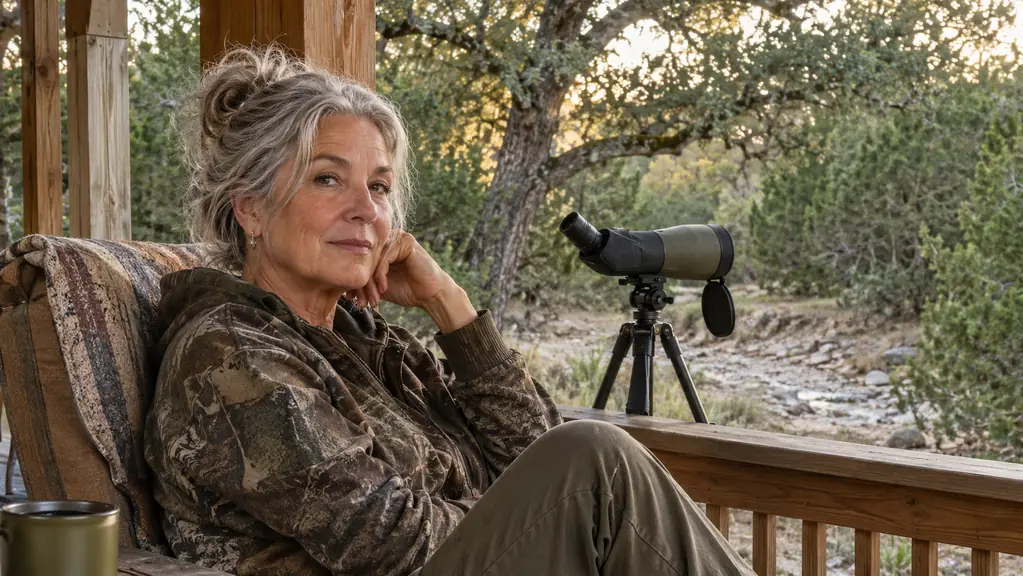
The first time I set a spotting scope on the railing of my back porch, I had been watching the same dry creek bed through binoculars for almost two years. What I could see did not change. How much I could see did. A brown shape under the live oaks turned into a doe with her head down and her ears working in two directions at once.
Mine is a Gosky 20-60x60, bought in December 2023 before a January trip to Aransas to see whooping cranes at distance. I have had it nearly three years now, three winters on the coast and a great many mornings on this porch. So here are ten reasons I think a scope earns its place, in plain terms, for somebody who loves the animals and does not care about the technical talk.
Two years of brown smudges, then one deer I could finally name
The Gosky 20-60x60 comes with a tripod, a carrying bag and a phone adapter, which is everything I needed to move from guessing to actually watching.
Amazon Check Today's Price on Amazon →Ten Reasons It Earned a Place in the Hall Closet
It turns a brown shape into an animal you can identify
For two years the far side of the creek bed gave me shapes and nothing else. Through my binoculars I could tell a deer from a turkey and that was about the end of it. The Gosky's 20-60x zoom lets me lock onto a target and then push in for detail, so a shape becomes a doe with a notch out of one ear, or a fox sitting down to scratch. That is the whole difference between watching wildlife and watching where wildlife probably is.
The low end of the zoom does most of the work
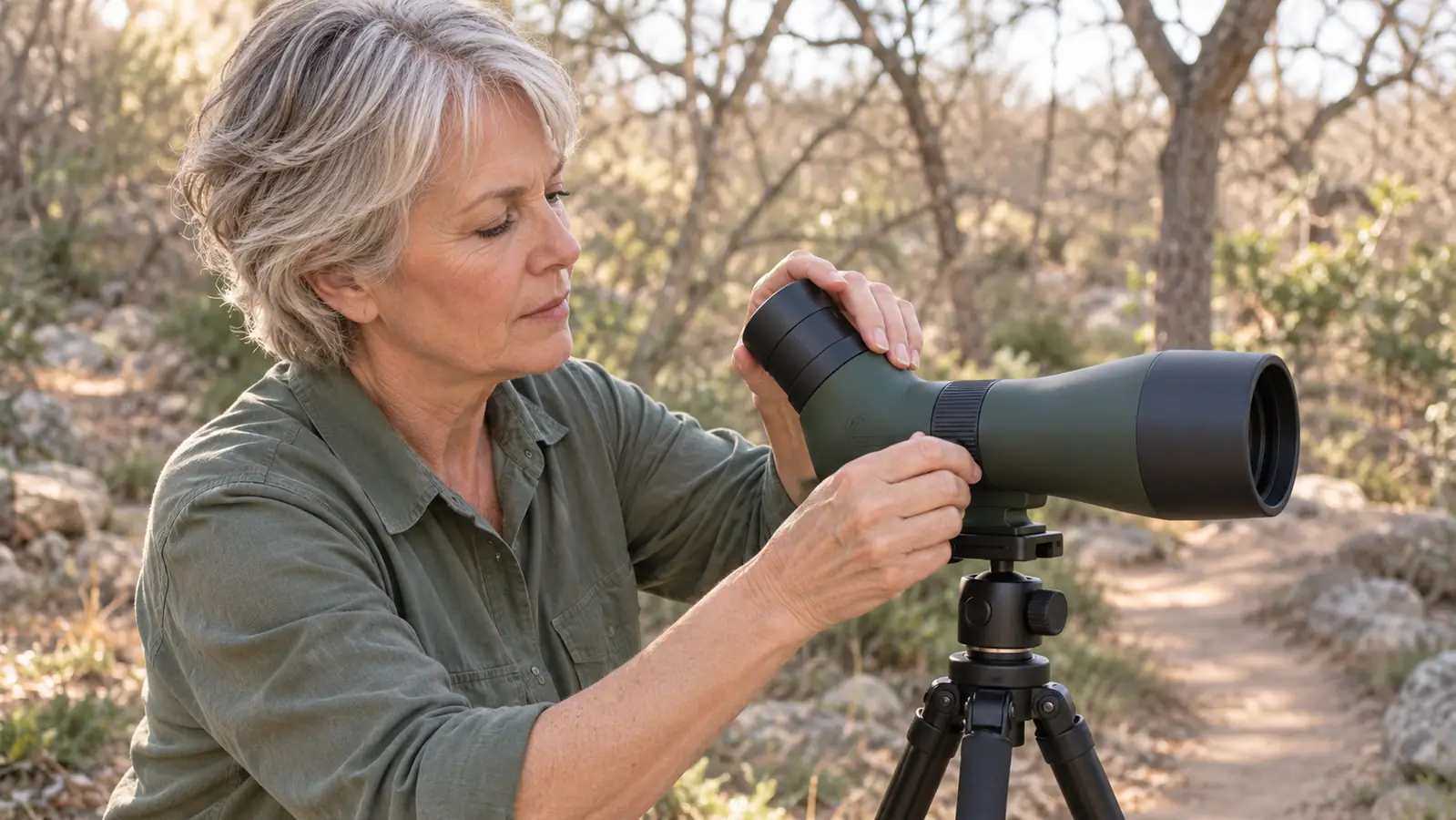
The 60x end is what the listing shouts about and I will be honest with you, I hardly use it. In Hill Country heat the air shimmers, and 60x magnifies the shimmer along with the bird. On the coast in January it magnifies my own hands. I live between 20x and 40x, and the view stays usable the whole way there because of the 60mm front lens. Nobody explained that to me before I bought it. Now I am explaining it to you, because it is the difference between liking this scope and being disappointed in it.
It reaches across water in a way binoculars cannot
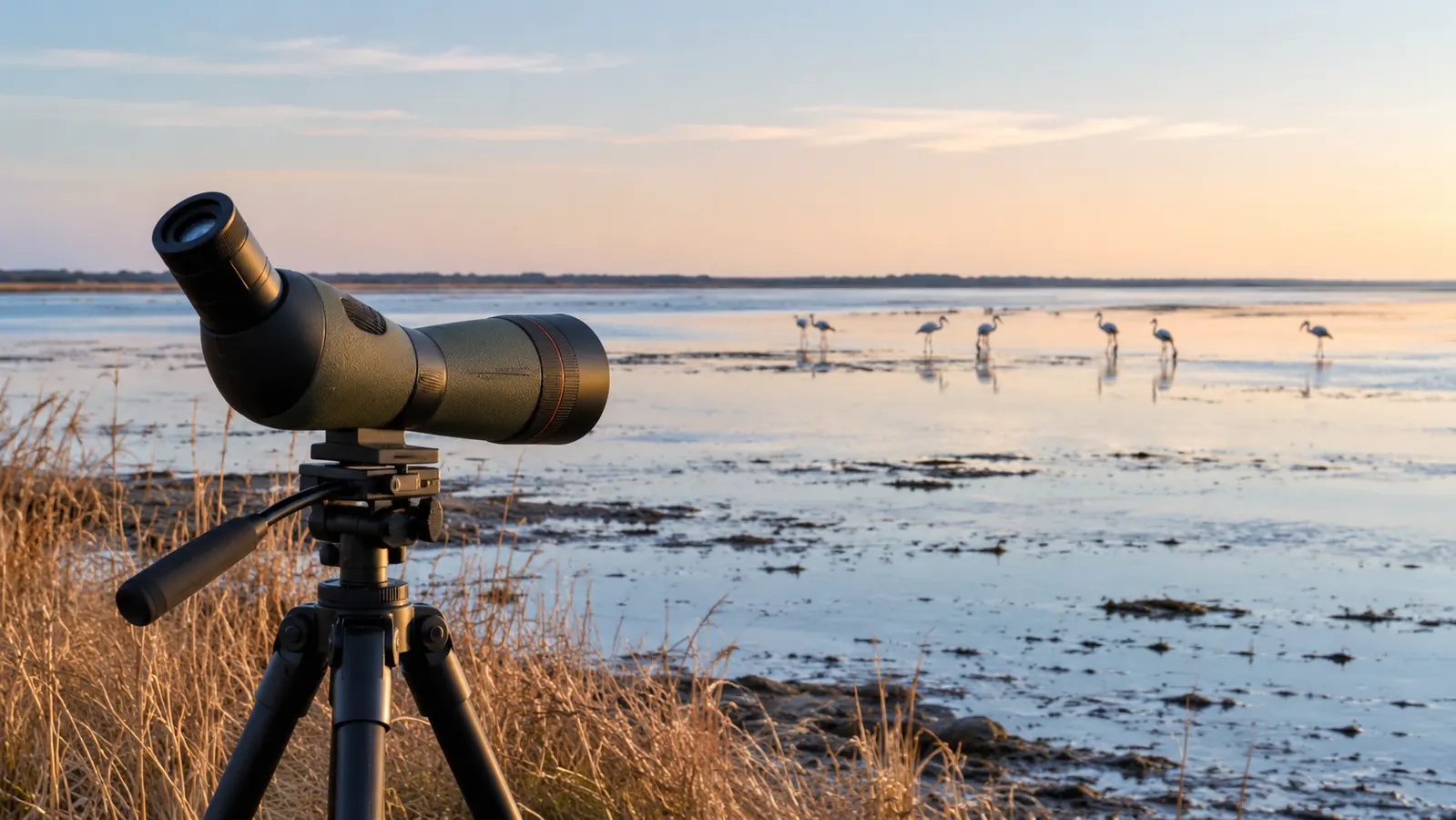
Cranes do not pose at the fence line. At Aransas you stand at a public viewing spot and the birds are a long way out in shallow water, and the whole point is to stay back and let them be. With binoculars I could confirm there were cranes. With the scope on its tripod I could see legs, the slow lift of a wing, one bird working something loose in the mud. Same morning. Same respectful distance. A completely different experience of the same birds.
The angled eyepiece saves your neck
The eyepiece sits at 45 degrees, so I sit in a chair, plant the tripod, and look down and forward instead of craning my neck up. An hour of that is comfortable. An hour of straight-through viewing is not, not at 63, and I say that as a woman who spent 31 years looking at things from odd angles in a jump seat. If you have any neck trouble at all, this is the feature that decides the purchase for you.
Set it down and the view holds still
Waterproof design, multi-coated glass, and 2.6 pounds, light enough that the small tripod in the box carries it without complaint. All of that matters for one reason. A scope you hold is a scope that shakes. The best thing I ever did was stop trying to handhold it. Once it sits still, the bird stops dancing and starts being a bird. The field of view runs about 50 to 110 feet at a thousand yards depending on where the zoom sits, which is plenty for picking one animal out of a treeline.
With binoculars I could confirm there were cranes. With the scope I could watch one of them work something loose in the mud.
You come home with a photograph without owning a long lens
The box includes a phone adapter, and that is how I take digiscoped pictures with my iPhone. It took me several tries to line the phone up with the eyepiece. My first afternoon produced a lot of black circles and one very good photograph of my own thumb. Once it is lined up, you focus the scope and the phone records what the scope sees. My camera with the long zoom lens is for closer work. The scope is for the far side of the water, and it gets me pictures there that I could not otherwise take.
Manual focus keeps the animal sharp instead of the branch
This is a manual focus scope, and I have come to prefer that. Turn the ring, watch the bird come sharp, stop. Nothing hunts around and settles on the branch in front of your subject. The trade is that you do the work, and in cold weather with tired hands it takes a second longer than you would like. I would rather have that second than have the focus land on the wrong thing entirely.
It rides in the back of the car without a plan
12.6 inches long, 5.5 wide, 5.5 tall, and it lives in its carrying bag in the hall closet. When I head to Lost Maples or South Llano River it goes in the back of the Outback beside the tripod, and I do not think about it again until I want it. There is no ceremony to it. Gear that needs a ceremony to travel does not travel, in my experience, no matter how good it is.
A wet morning does not end the trip
The scope is built to handle weather, and I have tested that without meaning to. It has been out in a Hill Country drizzle and it has stood in coastal wind three Januarys running, and it kept working every time. I still wipe it down and let it dry before it goes back in the bag, because that is how I was raised about anything with glass in it.
It makes you sit still long enough to see something
This is the reason I did not expect. Carrying a scope to a spot means sitting down, and sitting down means you are still there when the armadillo comes rooting through the leaves twenty minutes later. With binoculars I scan and move, scan and move. The scope keeps me in one place and the animals go back to their business around me. Paul has noticed. He says I have gotten worse about being on time for supper, and he is right.
What I'd Skip
Here are my honest limits. I would not buy a scope to watch my own bird feeder. The feeder camera sits about thirty feet off the porch and my binoculars are more than enough at that distance, and a scope turned on something that close is a lesson in frustration. I would not buy one if you mostly walk and glass on the move, because 2.6 pounds plus a tripod is a sit-down kit, not a hiking kit. And I would not spend the money before you have a place picked out where you can sit and look a long way, because looking a long way is the one thing a scope is genuinely good at. It is very good at it.
Three winters on the coast and it still rides in the same bag
If you have a chair, a porch rail and something worth looking at a long way off, this is the piece of gear that makes that view worth the sitting. The included tripod is fine to start; I added a sturdier one later for the coastal wind.
Amazon Check Today's Price on Amazon →